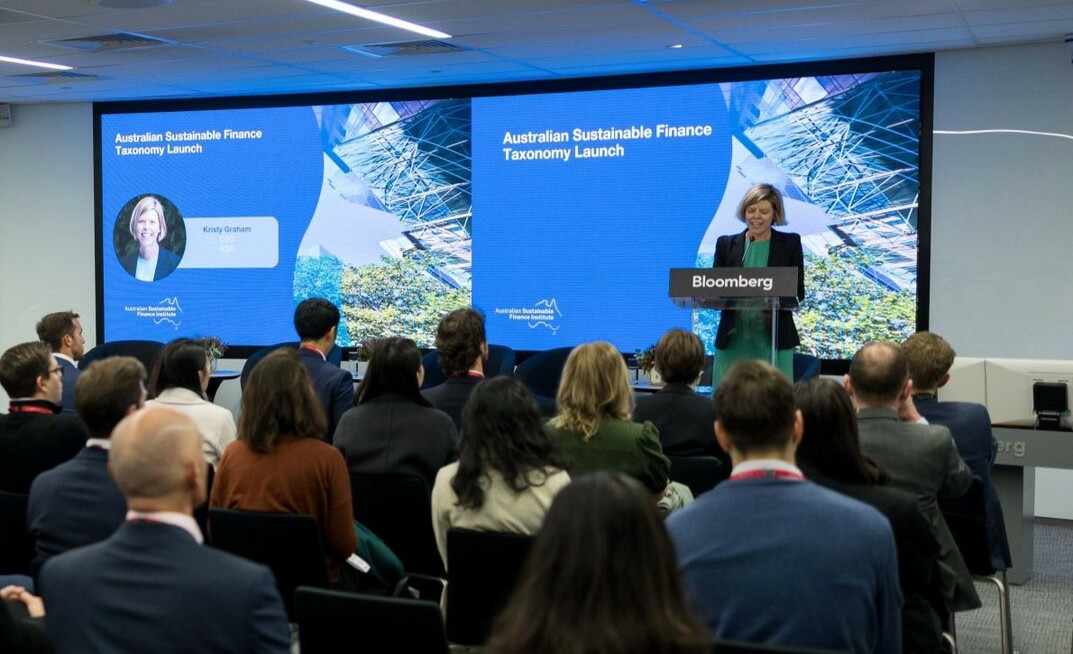


Australia's mining sector could be up for a wave of investment following the release of a classification system that outlines the types of economic activities that can be considered green.
Jointly developed by the Australian Sustainable Finance Institute and the Treasury, the Australian Sustainable Finance Taxonomy provides a Paris-aligned classification system for green and transition finance, specifically tailored to Australia's economic and environmental context.
Serving as a common language, the framework helps financiers assess the green claims of certain activities – from the installation of batteries and power lines, to transportation and minerals processing – in order to confidently invest in projects that advance net zero.
"The release of the taxonomy marks a transformative moment for Australia's sustainable finance market and a key achievement under the Australian Government's Sustainable Finance Roadmap," ASFI chief executive Kristy Graham said.
YOU MIGHT ALSO LIKE
The ASFI noted a taxonomy system already in place in Europe was broadly considered to be a benchmark framework.
However, Australia's classifications are the first in the world to include minerals, mining and metals, potentially give the resources sector access to about $1.9 trillion in pooled funding.
The refining of copper, lithium or nickel, for example, is considered green if carbon dioxide emissions are reduced from a 2019 baseline by 70% by 2040, and if those emissions do not exceed certain limits.
An implementation pilot stage involving major institutions – such as ANZ, Commonwealth Bank, National Australia Bank, Westpac, the Clean Energy Finance Corporation, Rest, Moody's Ratings and Rabobank – will run for several months, with the aim of testing the taxonomy's practical implications.
NAB chief climate officer Jacqueline Fox said the taxonomy would help businesses and industries tackle the energy transition, enabling financial institutions to credibly deploy green finance.
"NAB has been active in the development of the taxonomy since the earliest stages," Fox said.
"We're looking forward to taking part in the pilot and exploring how it can support both NAB and our customers to achieve our ambitions, and support Australia's transition to net zero and energy ambitions."
The taxonomy system could also redirect capital from the US given doubts over the Trump administration's commitment to the green transition.
CEFC chief executive Ian Learmonth described the classifications as a "key moment" in Australia's pathway to net zero.
"The taxonomy facilitates investors and business to work in concert, and to channel capital into credible net zero-aligned and transition activities," Learmonth said.
"It is an important step in building further confidence in Australia's transition to net zero in international markets, helping to mobilise investment into Australia's decarbonised future."