

Metal Logic believes the smelting technology it has developed will make it the "Amazon of Iron", a global platform that brings iron ore and steel end users together.
The company has spent the past two years getting its technological, manufacturing and market ducks in a row and is ready to launch into the market.
Unlike many of the other iron ore processing technologies being touted, Metal Logic's smelting process takes the iron ore right through to steel. And it claims it will do it much cheaper than conventional and other steel making technologies.
How much cheaper? Metal Logic reckons its production costs will be 20% lower than traditional "black" steel production processes and about 60% lower than proposed "green" steel alternatives.
YOU MIGHT ALSO LIKE
And it will not use coal.
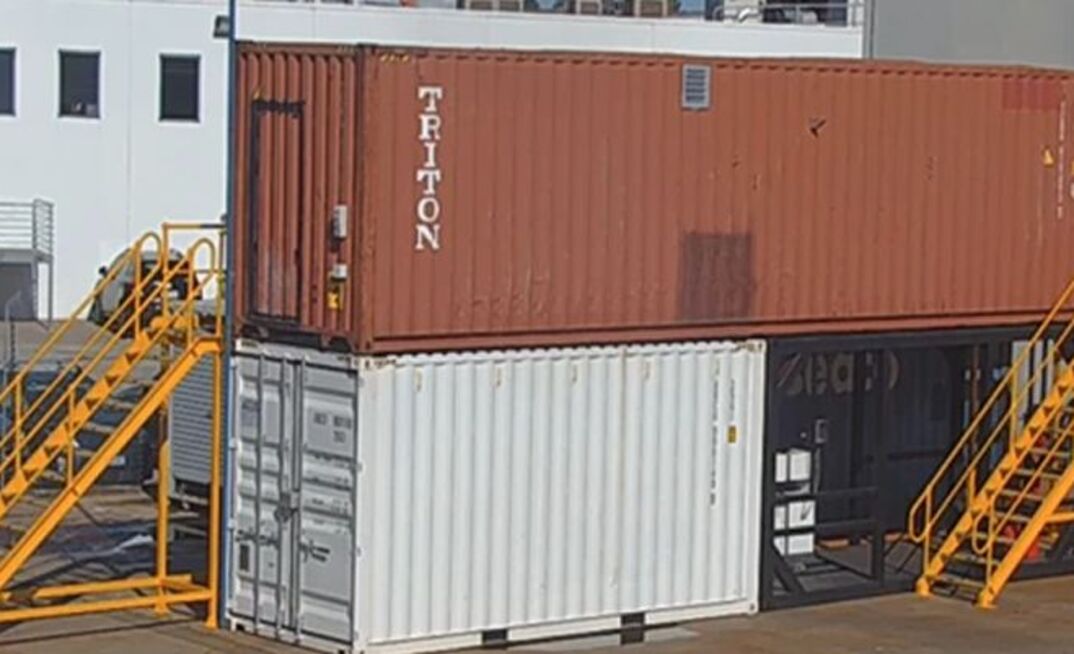
The technology is modular. It comes in 20-foot container-like pieces that can be joined to increase the throughput. Apparently 48 will turn out 1 million tonnes per annum of steel. Green steel.
How will it do this? Through its energy source.
What is that energy source?
Metal Logic managing director Joel Nicholls is not telling. At least not the press. Perhaps customers might get a peak behind the curtain.
Well, journalists are, by nature, suspicious, untrusting people so when confronted with something like this the natural inclination is to think that if something sounds too good to be true it probably is. Particularly when it is in a black box.
Back in the late 1990s Anthony Richter came out with the Richter Paradigm, a computer that he said thought like a human brain only about 180 times quicker.
Richter claimed the technology would put Bill Gates out of a job.
Then the Richter computer was put to the test.
Gates is still up towards the top end of the rich list and few remember Richter.
But what if?
But what if the technology does work and Australia does not back it?
After all, Australia has form in this area. And its miners love that saying "be the first to be second".
It could be one of the monumental misses of all time. Prime minister Anthony Albanese is talking about a Future Made in Australia.
Here is something made in Australia that its creators say needs no subsidies or green premiums – although they are prepared to entertain any offers that may come their way – that could be the basis of a major value-adding industry.
If this technology is as portable as Nicholls says and does what he says it does, then it could end up being transported somewhere else and another country will benefit.

It seems unlikely there will be a bonus for being the first to be second in that case.
What if it really can process lower grade iron ore?
The Pilbara's iron ore grades are dropping after all. This could be a valuable answer to that problem. Otherwise, those ores will either be ignored or shipped off to wherever the Metal Logic technology ends up for much lower prices.
What if the energy source does what Nicholls says and it really can turn out green steel?
Then Australia becomes an exporter of green steel and strikes a real blow for global decarbonisation.
Metal Logic plans to deploy its first crude steel array of four 20 foot modules at Port Hedland next year. That would turn out 70-80,000t per annum of crude steel.
Nicholls said the technology Metal Logic had developed did not require coal.
Bag it and tag it
So where does the carbon come from?
Nicholls said there were plenty of other carbon sources the system could use, including old plastic bags.
"This doesn't need a green premium, or CBAM [Europe's Cross Border Adjustment Mechanism] or government subsidies to compete," Nicholls told Australia's Mining Monthly.
"It doesn't need a 66% iron product. We've gone down to 55% Fe.
"We're talking to some groups that are lower grade. We can unlock some of the value by using the savings from the smelting side.
"We can start to process things that previously weren't economically viable."
Metal Logic is acquiring a site in Western Australia that has an existing mining lease on it, as well as ore and fines stockpiles.
Better yet, it is located within 20km of three of the iron ore four rail lines that run through the area: BHP's Hancock Iron's and Fortescue's.
Enigmatic energy source
Then there is this mysterious energy source.
"We're not talking about the energy source," Nicholls said.
"We're sourcing it. We can get it. We're comfortable it is something that delivers the outcome we want."
What about electricity? That is something that can be in short supply in the Pilbara.
"We can source standalone energy," Nicholls said.
"It's something we've already solved for."
Made in Victoria
Nicholls said the first smelter units would be trucked in from Victoria where they were being manufactured.
"We may be able to get to 1Mtpa by the end of the year," he said.
"We're working on solutions to export the steel. We're working with Arup on one solution.
"We aim to finalise offtake with state distributor.
"We've also started engaging with government and related stakeholders."
The plan is to start out with crude steel because, Nicholls explains, "that's the path of least resistance".
"Then we can add modules that increase our casting capability and move towards finished steel products."
Metal Logic is understandably not moving towards structural steel products any time soon. That requires a lot of certification.
Efficiency key
Nicholls said the secret to Metal Logic's success was its focus on thermal efficiency.
"Others haven't been," he said.
"We're looking at the point where we can get to genuine zero emissions steel."
Its technology is Australian made.
Metal Logic has taken its time delivering the technology.
It started down its path in 2023 and spent 2024 setting up a laboratory for resource qualification, planning for a 1Mtpa plug-and-play floating port, integrating a crude billet steel module into the modular smelter, securing facilities to make more of the smelter units and generating a global resource suitability database for sales targeting.
In the first half of 2025 it engaged Arup for a scalable floating smelter interface, started discussions with steel distributors, secured its first steel customer order and its first resource qualification customer, and started designing a sheet, plate and coil module.