

Taking people out of harm's way can not only improve safety, it can boost the company's bottom line. That is a key tenet of a whitepaper published by the Global Mining Guidelines Group.
Zero Entry Mining: An Exploratory Whitepaper highlights the key enablers, challenges and opportunities of the concept.
It also serves as a roadmap to help mining companies remove people from the coal face, literally.
GMG project co-lead and Gavin Yeates consulting principal Gavin Yeates told Australia's Mining Monthly that zero entry mining was more than just automation.
YOU MIGHT ALSO LIKE
Rather, he says, it is about a mindset shift.
And it is not about taking people out of mines, just out of the parts of mines where the risk is greatest.
"The end game is reimagining the mining process so it doesn't have people in it," Yeates said.
A zero entry mining operation is already possible.
Indeed, levels of major block cave mines such as Cadia and Ridgeway already operate without people.
The technology to develop the mines without people is not there, but it is coming.
This idea of reimagining the mining process can be intoxicating.
What if, Yeates asks, swarms of small equipment were used?
He said the need for ventilation would disappear, reducing an infrastructure and operating cost from an underground mine.
Ah, people say, what about when a machine breaks down? Who will go and get it.
Yeates points to a tug developed by Universal Field Robots, now part of Sandvik, for block cave mines.
That piece of equipment can recover damaged equipment and haul it to manned maintenance areas for repair.
"One solution is to create a way for robotic changes of ground-engaging tools, wheels and engines," Yeates said.
Indeed, automating battery changeouts for underground mining equipment are already possible.
Imagine that
Yeates said the move to zero entry mining would require creativity.
"Sometimes the most creative solutions come out of putting constraints on things," he said.
"If you say you have to take people out of mines, people will find a way to do that.
"People have been talking about zero entry mining for a while.
"I think the idea of this whitepaper is to push the discussion around it. We're going to come out with other discussion papers aimed at answering the points raised by the naysayers and to look to the opportunities."
Those opportunities include capital savings, operational savings and safer operations.
"If you can design equipment specifically for the orebody you can reduce dilution," Yeates said.
"Financially it's hard to find why you wouldn't do it."
Think differently
Start thinking about things differently and a host of other possibilities emerge.
Yeates said he struggled to understand why miners immediately considered electrifying the trucks when they looked to electrify their operations.
"We've had an electric means for moving dirt for the past 50 years," he said.
"It's called a conveyor.
"The industry says it wants the flexibility of a truck.
"They want the flexibility because they are crap at planning.
"With a conveyor, the mine has to be better planned. It can't be ad hoc. It's a way of operating we haven't been used to.
"The Germans have been running conveyors in mines for years."
Another option is to process the material underground. After all, miners have been crushing it down below for decades.
Why carry all the material to the surface just to extract the fraction of metal in it?
That is a thought Gekko Systems founder and chief engineer Sandy Gray had.
That led to Gekko's development of Python, a modular process plant designed for use underground.
So far nobody has taken one on for use underground but they have put it in a shed.
OEM challenge
Yeates said the original equipment manufacturers could be a challenge to the zero entry process.
"They have a lot invested in keeping things as they are," he said.
"They will need to redesign the equipment.
"One is to have it fully remotely operated and the second is to have it able to be maintained in a way that robots can do it.
"It should be modularised.
"Just look at where some of the robotics are going to now.
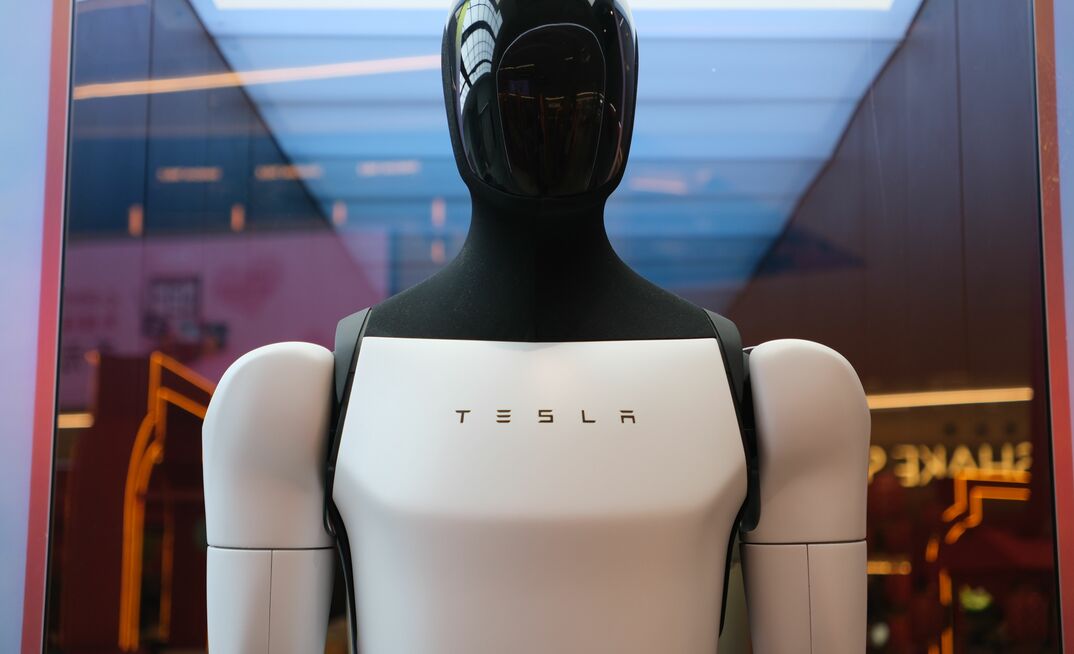
"There is no question in our mind that we'll have something like the Optimus robots operating underground soon. They can do things such as hanging services such as communications ahead of development."
Automation lessons
Yeates saw the benefits of having leaders on board when it comes to introducing major operational shifts when he oversaw the introduction of automation into BHP's surface mines.
He credited BHP iron ore leaders Jimmy Wilson and Tony Ottaviano with helping get the technology into the operation.
"It was not just the autonomous equipment, it was the introduction of the Remote Operations Centre, which was about changing the way we worked," Yeates said.
"Look at the cost of mining and putting a tonne of iron ore on a ship since BHP, Rio Tinto and Fortescue all automated their Pilbara iron ore operations.
"Prior to about 2010 the cost of putting 1t of iron ore on a ship was about $33.
"Post 2015 when they were running automated drills and trucks you are talking about $13-$14.
"It's not all due to that automation. It was about redesigning the production process.
"For BHP that was about the ROC."
There was also BHP's move to hubs, where the iron ore was crushed before being put on trains and taken to port. Before that all the crushing and screening was done at the ports.